
The headline ROI numbers (2026)
The most consistent dataset on remodeling ROI in the U.S. is Remodeling Magazine's annual Cost vs. Value Report, which surveys real-estate professionals nationwide on how much specific projects add to resale value. Here's what their 2026 numbers say about kitchens:
| Project type | Avg cost | Avg resale value added | ROI % |
|---|---|---|---|
| Minor mid-range remodel (cosmetic, cabinets stay) | $28,000 | $22,400 | 80% |
| Major mid-range remodel (full gut) | $77,000 | $48,500 | 63% |
| Major upscale remodel (premium materials) | $155,000 | $77,500 | 50% |
The clear pattern: the more you spend, the smaller the percentage you recoup. A minor cosmetic refresh returns about 80% at resale, while a fully premium remodel returns roughly half. This is consistent across more than two decades of Cost vs. Value data and reflects how housing markets actually work.
Why ROI gets worse as you spend more
Buyers pay for a kitchen that looks great and works well. They don't pay an extra $80,000 because the cabinets are fully custom instead of semi-custom. Once a kitchen reads as "modern, well-equipped, and recently updated," buyer willingness to pay flattens out hard.
Three forces drive the diminishing ROI:
- Buyer perception ceilings. A buyer comparing two homes can usually tell whether the kitchen is dated, functional, or premium. They struggle to distinguish between a $90,000 kitchen and a $160,000 kitchen — and they don't pay you the difference even if they could.
- Neighborhood comp limits. Buyers comparison-shop. If most homes in your neighborhood sell for $500,000, a buyer is unlikely to pay $580,000 just because your kitchen is dramatically nicer than the comps. The kitchen helps you sell faster at the comp price; it doesn't lift you above it.
- Personal taste risk. The more custom and distinctive your kitchen, the higher the chance a given buyer doesn't love it. A neutral, mid-range kitchen has the broadest appeal; a strongly designed premium kitchen narrows the buyer pool.
Regional ROI differences
Cost vs. Value data also breaks ROI down by region. The headline gap is meaningful: a kitchen remodel in the Pacific region (CA, OR, WA) returns about 15 percentage points more than the same project in the East South Central region (KY, TN, AL, MS).
| Region | Major mid-range ROI |
|---|---|
| Pacific (CA, OR, WA, HI, AK) | 73% |
| Mountain (CO, AZ, UT, NV, ID, MT, WY, NM) | 68% |
| South Atlantic (FL, GA, NC, SC, VA, DC, MD, DE, WV) | 66% |
| Mid Atlantic (NY, NJ, PA) | 64% |
| New England (MA, CT, RI, NH, ME, VT) | 63% |
| West North Central (MN, IA, MO, KS, NE, ND, SD) | 61% |
| West South Central (TX, OK, AR, LA) | 60% |
| East North Central (OH, MI, IN, IL, WI) | 58% |
| East South Central (KY, TN, AL, MS) | 57% |
The regional gap mostly tracks home price appreciation. In high-appreciating markets, almost every dollar of improvement holds value because the surrounding market is rising. In flatter markets, you're trying to recoup your investment from a buyer pool that's also negotiating harder.
The ROI sweet spot for most homes
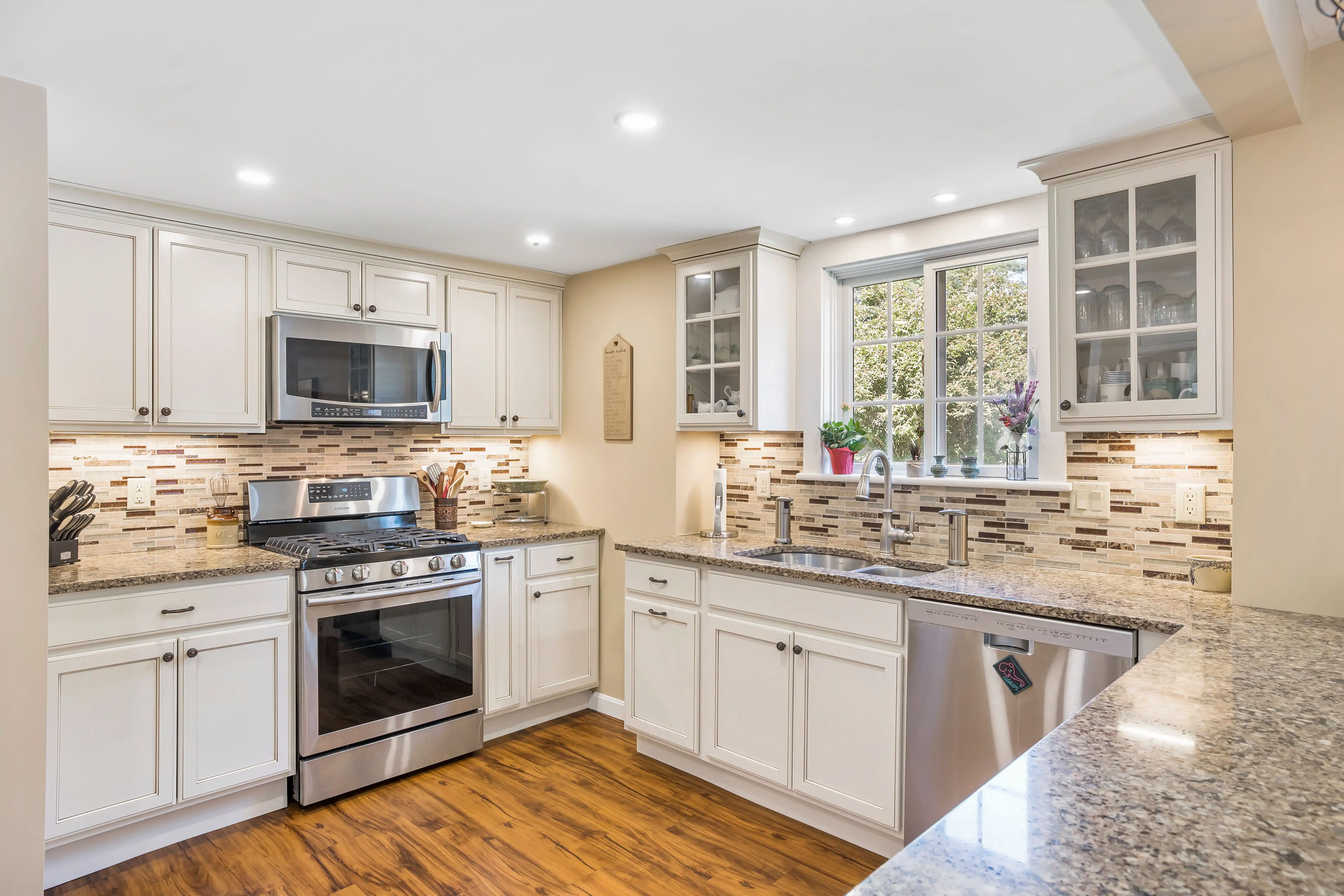
For the majority of single-family homes in 2026, the highest-ROI kitchen project is a minor mid-range remodel — keeping the existing cabinet boxes (refacing or repainting them), upgrading countertops, replacing appliances, refreshing lighting, and adding a designer-grade backsplash.
This kind of project typically lands in the $25,000–$45,000 range and modernizes the look completely without the disruption (or expense) of demolishing the existing layout. Average ROI runs 75–85%.
What a high-ROI minor remodel looks like
- Refaced or freshly painted existing cabinets
- New cabinet hardware (modern pulls and knobs)
- Quartz or mid-grade granite countertops
- New designer-grade backsplash
- New mid-tier stainless steel appliance package
- New undermount sink and modern faucet
- Updated under-cabinet lighting and a new statement pendant or two
- Fresh paint on walls and trim
For a kitchen that's structurally fine but visually dated, this scope hits 90% of the visual upgrade of a full remodel for 30–40% of the cost.
Staying vs. selling: how the math changes
If you're selling within 1–2 years
Optimize for ROI, not for personal preference. A neutral, mid-range refresh is almost always the right call. Avoid bold color choices, statement materials buyers might not love, and fully custom features. Stick close to what comparable recently sold homes in your area show.
If you're staying 5+ years
The math shifts toward "what will I enjoy living with daily for the next 5 years," because the daily-use value compounds. A $20,000 upgrade you love using every day for 5 years is worth more in lived experience than a $20,000 upgrade you barely notice. ROI matters less; functional fit matters more.
If you're staying 10+ years
ROI is essentially irrelevant. The kitchen you build is for you, not a future buyer. The only ROI consideration is making sure you don't dramatically overbuild for the neighborhood (a $200,000 kitchen in a $400,000 home is still over-improving).
One useful rule of thumb across all three scenarios: your total kitchen remodel investment should generally not exceed 10–15% of your home's current market value. A $500,000 home can comfortably absorb a $50,000–$75,000 kitchen. A $1.2M home can absorb $120,000–$180,000. Going much above the 15% line starts producing real ROI losses.
High-ROI choices in a kitchen remodel
Within whatever budget you set, certain choices consistently return more than others:
- Modernizing the layout — opening a cramped galley to the dining room, adding an island where one is missing — adds disproportionate perceived value because it changes how the home lives.
- Better lighting — under-cabinet LED, recessed cans, a statement pendant — costs little and shifts buyer perception of the kitchen from "okay" to "high-end" instantly.
- Quartz countertops over laminate or tile is the single most-noticed upgrade by buyers and one of the cheapest per dollar of perceived value added.
- Upgraded appliances — a stainless steel suite at the mid-tier (Bosch, KitchenAid) reads as "premium kitchen" without the premium kitchen price.
- Refacing or repainting cabinets instead of replacing them — same visual result, 60–80% less cost.
- Fresh white or warm-neutral paint — sounds trivial, but light, current paint colors are one of the highest-ROI dollars in any kitchen project.
Low-ROI mistakes to avoid
The flip side: certain choices return much less than they cost.
- Pro-grade appliances in a starter home. A $9,000 Wolf range in a $400,000 home returns maybe $500 at resale. Buyers at that price point don't pay for it.
- Fully custom cabinetry in any home under ~$1M. The cost-to-value gap vs. semi-custom is typically the largest negative ROI move in remodeling.
- Highly personal design choices. Bold cabinet colors, unusual layouts, statement materials that aren't to mainstream taste. They might make the home you love, but they shrink the buyer pool when you sell.
- Removing space buyers expect. Removing a pantry or eating area to enlarge the cooking zone often hurts resale because most buyers prioritize storage and informal dining.
- Trendy finishes with short shelf lives. Anything that screams "2024" or "2025" — specific tile patterns, niche cabinet colors — will date faster than a more neutral choice and hurt resale by year 5.
- Over-customizing for one cooking style. A built-in pizza oven, a dedicated wok station, a four-zone induction setup — great if it's your dream kitchen, but specialized features rarely pay for themselves at resale.
What buyers actually pay for
Realtor surveys consistently show buyers value certain kitchen attributes far above others:
- Visual update. "Looks recently updated" is the single biggest driver of buyer willingness to pay. The actual cost of achieving the look matters far less than the perception itself.
- Functional layout. Buyers can tell within 10 seconds whether a kitchen "works." Awkward triangles, blocked sight lines to the family room, and cramped islands hurt perceived value disproportionately.
- Counter space. Buyers strongly prefer kitchens with generous prep space. An island or peninsula significantly raises perceived value if the kitchen didn't have one.
- Storage. Pantry space and cabinet capacity matter to buyers more than they often matter to the current owner. Don't sacrifice storage for aesthetics.
- Light. Bright kitchens consistently outperform dark ones at resale, even with comparable finishes. Lighter cabinets, more or larger windows, and better artificial lighting all help.
What buyers don't pay extra for, despite homeowner intuition: appliance brand prestige (within reason), countertop material (quartz vs granite vs marble — they read as "nice stone"), exotic woods or finishes, and most "smart" features beyond very basic Wi-Fi connectivity.
A note on the data
The figures in this guide come from Remodeling Magazine's 2024–2025 Cost vs. Value Report (the most current available as of early 2026), the National Association of REALTORS® 2024 Remodeling Impact Report, and aggregate pricing data from major project quoting platforms.
ROI percentages reflect average outcomes across thousands of projects. Your specific result will depend on your home, your neighborhood, your remodel quality, and the timing of your sale. Use these as planning benchmarks, not guarantees.
Get a target budget for your home
Use our calculator to size your remodel to your home's value and city. Aim for the ROI sweet spot.
Open the calculator