
The headline timeline
For a typical mid-range kitchen remodel — full demo, new cabinets, new counters, no major structural changes — here's the realistic timeline:
- Total project: 4–6 months from "we're doing this" to a finished kitchen
- Active construction: 6–10 weeks of work in your home
- Without-a-kitchen period: 5–8 weeks (the construction phase minus a couple of weeks at the start when only demo and rough-in happen)
Premium remodels with custom cabinetry or significant structural work can stretch to 8–12 months. Cosmetic refreshes (paint, hardware, counters only) compress to 3–6 weeks total. The week-by-week breakdown below assumes a typical mid-range full remodel.
Phase 1: Planning & design (weeks 1–6)
Define scope and budget
Planning- Walk through your kitchen and write down what's frustrating, what works, what you want to change
- Set a realistic budget using a cost calculator
- Decide if you'll work with a designer, a design-build firm, or a general contractor
- Start a Pinterest or Houzz idea board
Initial designer or contractor consultations
Planning- Schedule 3–5 in-home consultations
- Each consult takes 60–90 minutes; share your idea board, budget, and timeline
- Ask each contractor for a written rough estimate within 1–2 weeks
Compare bids and pick a contractor
Planning- Receive itemized bids; compare scope, allowances, and timeline
- Call references for the top 2 contractors
- Verify license, insurance, and online reviews
- Sign contract with chosen contractor and pay initial deposit (10–15% of total)
Design development begins
Design- Detailed measurements taken in your kitchen
- First design concepts presented (layout, cabinet configuration)
- Discuss appliance specifications and cabinet finish direction
Material and finish selections
Design- Visit cabinet showroom; pick door style, finish, hardware
- Visit stone yard; pick countertop material and slab
- Select tile for backsplash and flooring
- Finalize appliance package
Final design and contract sign-off
Design- Designer issues final drawings and material schedule
- Contractor revises bid based on confirmed selections (often $3,000–$10,000 of changes vs. initial bid)
- Sign final contract with all selections locked in
Phase 2: Permitting & ordering (weeks 7–14)
Permits filed; cabinet order placed
Procurement- Contractor submits permit application to local building department
- Cabinets ordered (this triggers the longest lead time in the project)
- Specialty appliances ordered if any need long lead times (Wolf, Sub-Zero often 8–14 weeks)
Permit review & lead-time waiting
Procurement- Building department reviews permits (typical: 2–4 weeks; longer in busy markets or historic districts)
- Material suppliers fabricate cabinets and prepare specialty items
- You order remaining items: faucet, lighting, hardware, drawer organizers
Final pre-construction prep
Procurement- Permits issued
- Cabinets finish fabrication and ship to contractor's warehouse
- Contractor finalizes subcontractor schedule (electrician, plumber, tile installer, painter)
- You set up a temporary kitchen elsewhere in the house (week 14)
- Pack up the existing kitchen the weekend before demo
Phase 3: Construction (weeks 15–22)
Demolition & preparation
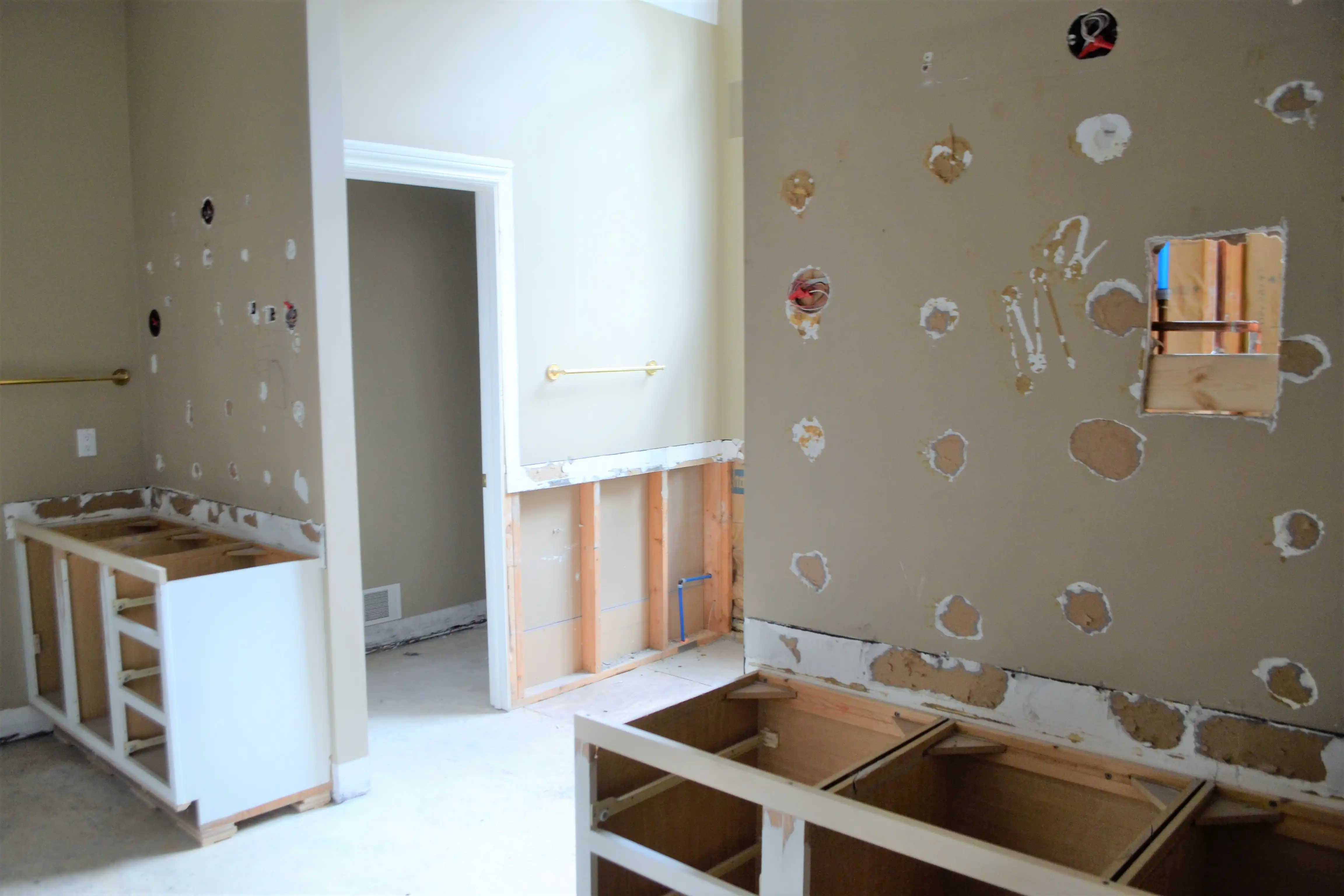
Construction- Day 1: Old cabinets, counters, appliances removed and hauled away
- Day 2: Old flooring removed if applicable
- Day 3: Walls opened where new electrical, plumbing, or framing is needed
- Day 4–5: Inspection of any unexpected conditions (rotted subfloor, old wiring, etc.)
Rough-in: framing, electrical, plumbing
Construction- Any structural framing changes (new headers, removed walls)
- Electrical rough-in: new outlets, circuits, lighting boxes, panel work
- Plumbing rough-in: new sink/dishwasher locations, gas lines
- HVAC adjustments if needed
- City rough-in inspection at end of week
Drywall & insulation
Construction- Insulation in any opened walls
- Drywall hung, taped, mudded
- 3 coats of mud, sanding between coats
- Primer coat on new drywall
Flooring installation
Construction- Subfloor prep
- Tile, hardwood, LVP, or other flooring installed
- Flooring goes in before cabinets so cabinets sit on top of finished floor (or "floats" with the floor going up to cabinet edges, depending on contractor preference)
Cabinets installed
Construction- Base cabinets first, leveled and shimmed
- Wall cabinets next
- Tall cabinets and pantry units
- Crown molding, light rail, fillers
- Templating for countertops at end of week (fabricator measures the installed cabinets)
Counter fabrication wait + appliance install
Construction- Countertops are at the fabricator (typical fab time: 1–2 weeks after templating)
- Appliances delivered and roughed in (electrical and gas hookups, but final install waits for counters)
- Painters can start on walls and ceiling
- Some contractors take a brief slowdown this week — work depends on counter timing
Counters install + plumbing finish
Construction- Countertops delivered and installed (1–2 day process)
- Sink dropped in / undermounted to counters
- Plumber connects sink, faucet, dishwasher, garbage disposal
- Range and other appliances finalized
Tile backsplash + finish carpentry
Construction- Backsplash installed (1–3 days depending on complexity)
- Trim, baseboards, transitions completed
- Light fixtures and switches finalized
- Final electrical and plumbing inspections
Phase 4: Punch list & closeout (weeks 23–24)
Substantial completion + punch list
Closeout- Walk-through with contractor; create a punch list of remaining items (touch-up paint, drawer adjustments, missing trim)
- Most punch list items are minor — figure 15–30 individual items for an average kitchen
- Final cleaning crew comes in
Punch list complete + final payment
Closeout- Contractor returns to address punch list items
- Final inspection by city if required
- Lien waivers collected from all subcontractors
- Final payment to contractor
- Warranty documents and material registration completed
What causes delays
Most kitchen remodels run 1–4 weeks long on the original timeline. The most common culprits:
- Cabinet damage during shipping. A door arrives scratched or a panel is the wrong color. Replacement parts add 4–6 weeks.
- Hidden conditions found during demo. Mold behind drywall, rotted subfloor, old aluminum wiring, asbestos floor tile, undersized electrical service. Each adds 1–3 weeks.
- Permit delays. Backlogged building departments, plan revisions required, historic review, or HOA approvals.
- Counter template issues. If the cabinet install isn't perfectly level, the fabricator may need to re-template, adding a week.
- Custom item lead times shifted. A specialty appliance pushed back, a custom range hood that takes longer than quoted.
- Subcontractor scheduling. Tile installer is double-booked, plumber's other job ran long. Common in busy markets.
- Owner-driven changes. "Can we add an outlet here?" "Actually let's switch to the other tile." Each mid-project change adds days.
Build a 15% time contingency into your expectations. If your contractor says 8 weeks of construction, plan on 9–10. If they say 4 months total, plan on 5.
Living without a kitchen during the build
For 5–8 weeks, you won't have a working kitchen. The standard strategies:
- Set up a temporary kitchen elsewhere. Mini fridge, microwave, electric kettle, toaster oven, hot plate. Common locations: laundry room, dining room, garage. A folding table provides prep space.
- Move the coffee setup somewhere accessible. Don't underestimate this. Morning coffee is the one thing you'll miss most.
- Plan a "no-cook" food rotation. Rotisserie chickens, pre-made salads, sandwiches, takeout. Slow cookers and Instant Pots work fine in a temporary kitchen.
- Budget for the food premium. Plan on $400–$1,500 in extra food costs over the construction period (more eating out, more pre-prepared foods).
- Move the dishwashing setup. A bathroom sink can handle dishes if you're disciplined; many homeowners use a laundry sink instead.
- Use disposable plates and utensils. Not glamorous, but enormously simplifying for the construction period.
Now that you know the timeline, get the cost
Use our calculator to see what your specific kitchen remodel will cost in your city.
Open the calculator